
We teach architecture based on the review of precedent. We ask students to examine “worthy” works of architecture and learn form them. During their studies students get to “know” around 200 works. This sounds very close to machine learning assignments, with the advantage of ML algos can examine much much larger (100.000+) data-sets, but with whole honesty, relatively shallow review of architectural features.
Architectural design process usually starts from site analysis, where most notable features – view lines, insolation ( sun pattern), neighbors… are noted and transferred into geometry, for example this could represent corner lot analysis.

With some luck little and a lot of pixy dust, AI – like a good student would transform this input into a first draft architecture proposal.
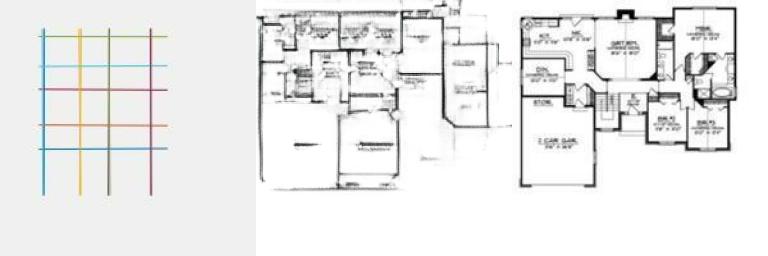
Were what was input – left image is transformed into output: first draft – middle image, and right image reference plan, or what it learned from.
All the images are 300×300 pixels and are proof of concept, and not really floor plans, but a first draft.
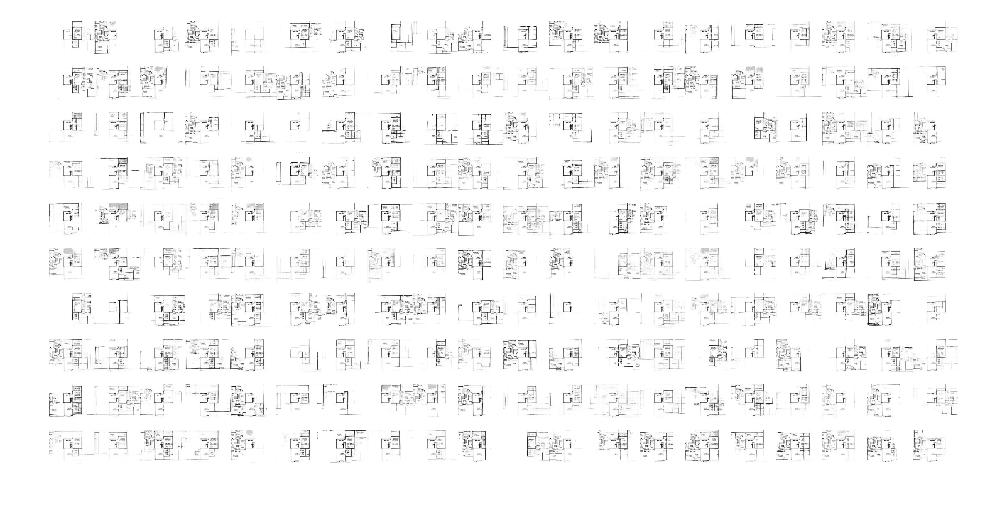
Summer 2016 – proof of concept
Second part a architectural development is a bit more complicated with one major step – evaluation of spaces that floor plans represent.
Interestingly humans thru history have evolved evaluation system to nearly one – person – one view, or building on multiple interpretations of Beauty is in the eye of the beholder meaning. So this multidimensional vector in most neuroesthetic and environmental psychology revolves around:
| Aesthetic preference | Culturally conditioned preference | Pure utilitarian value | Connoisseurship |
| Visceral reading | Media | Generous, too small | What is conditioned by exploration |
| Cognitive reading | Schools | easy to cook dinner for 12? |
here is when Affective computing can help
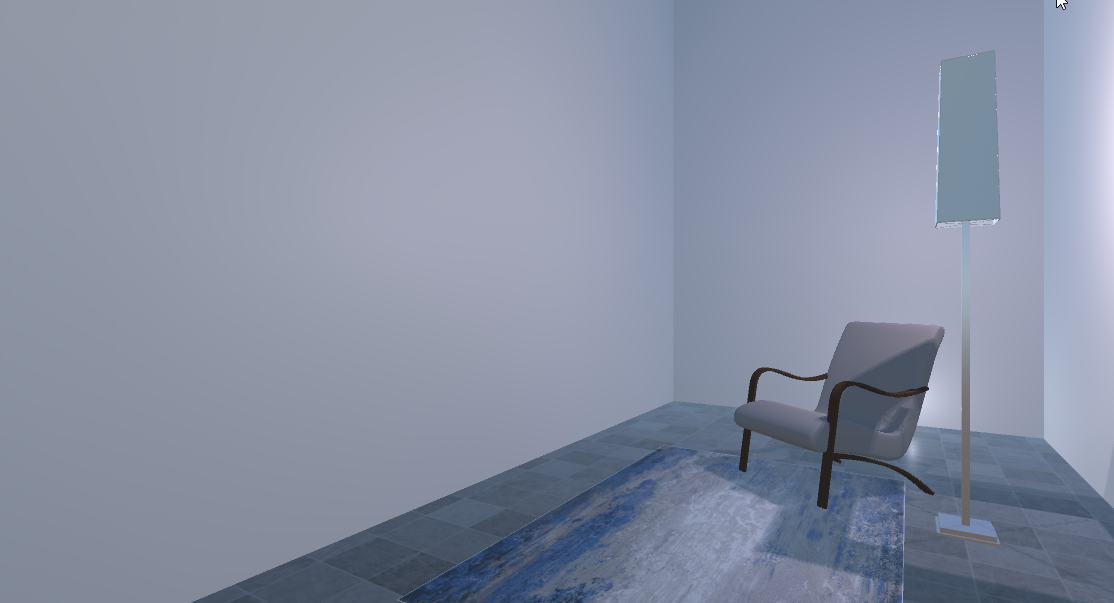
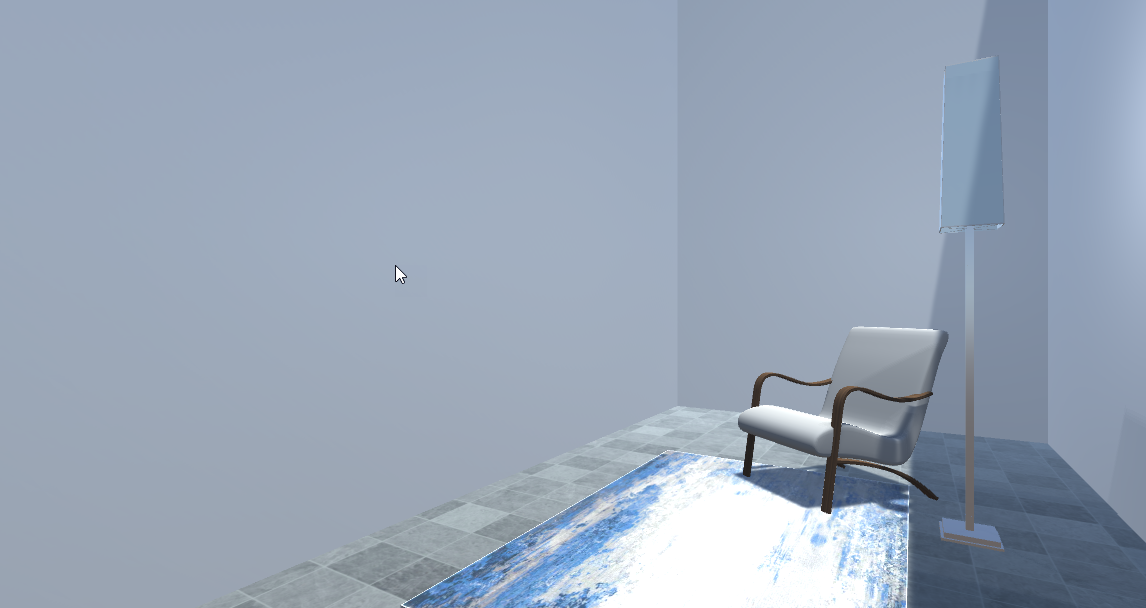
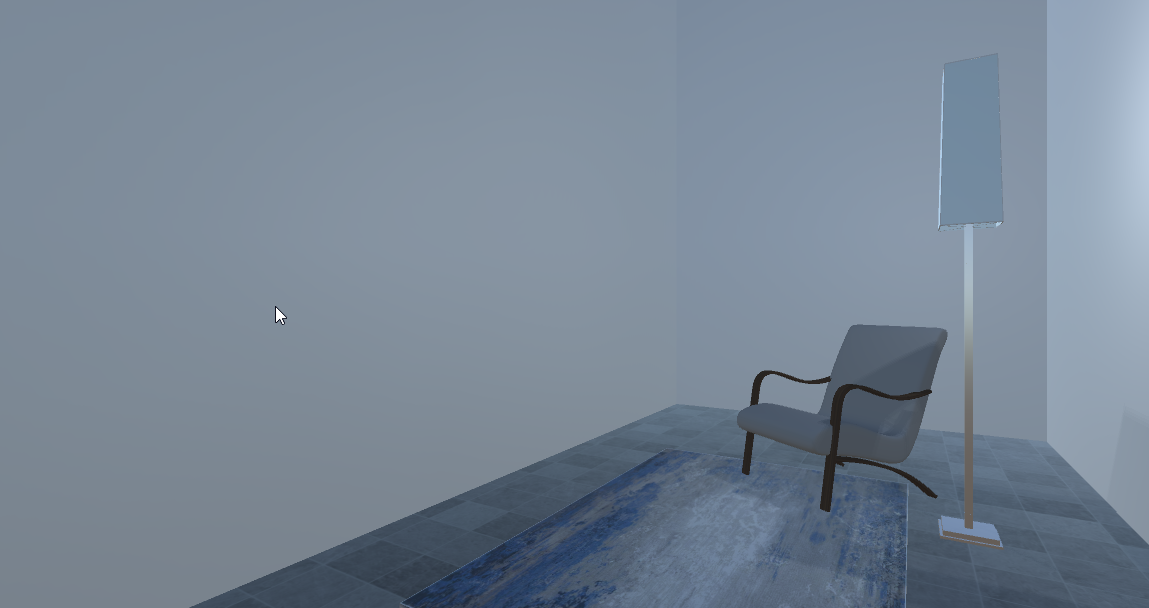
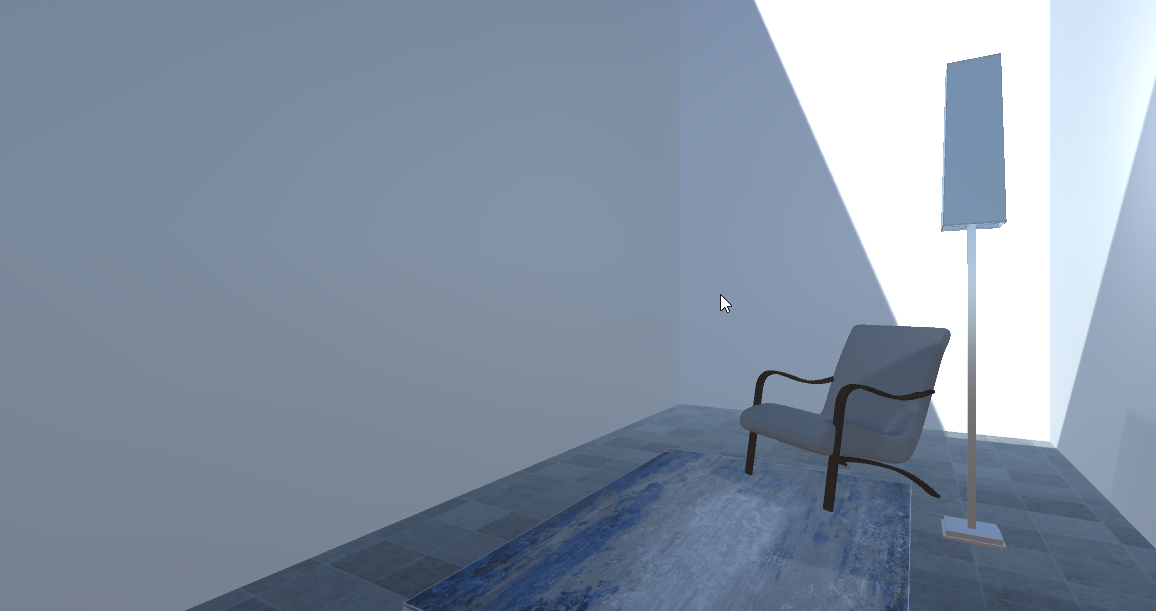
We can correlate some components of personality, key socioeconomic data, and even important aesthetic preferences to preferable spatial configuration selection. In this stage important data and correlations would be:
Socioeconomic data and Personality data
correlated to
Room size preferences and Moods and emotions that that room puts you in.
As a data gathering engine a VR game has been developed that would let players investigate synthetic space created and collect data on preferences.
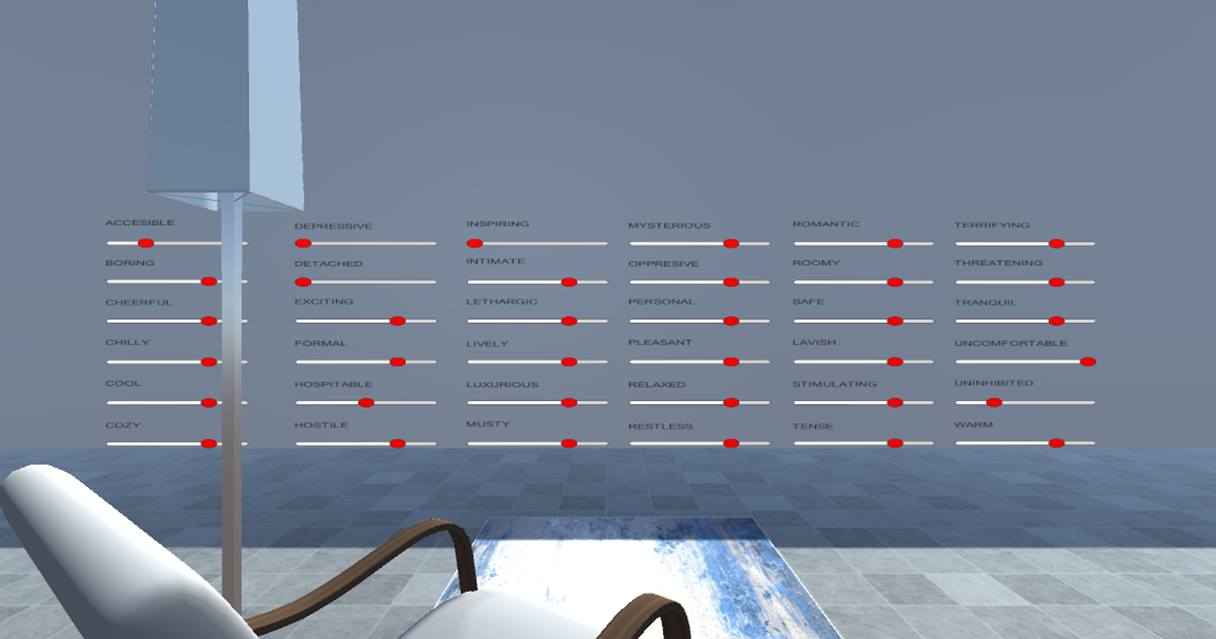
Game would collect (second line explains type of dataset):
and types of moods – emotions distilled down
| SOCIO-ECONOMIC | PERSONALITY | IN GAME ROOM SIZING | ATMOSFERE QUESTIONERE | AUDIO | VIDEO |
| CSV | CSV | CSV | CSV | AUDIO | GAMEPLAY |
| VIDEO+AUDIO | |||||
| AGE,SEX | BIG 5 | SIZE+TIME STAMP | SELF REPORTED | ||
| INCOME | |||||
| EDUCATION | |||||
| MORAL STANDARDS? | PLAYER POSITION? | TIMESTAMP? |
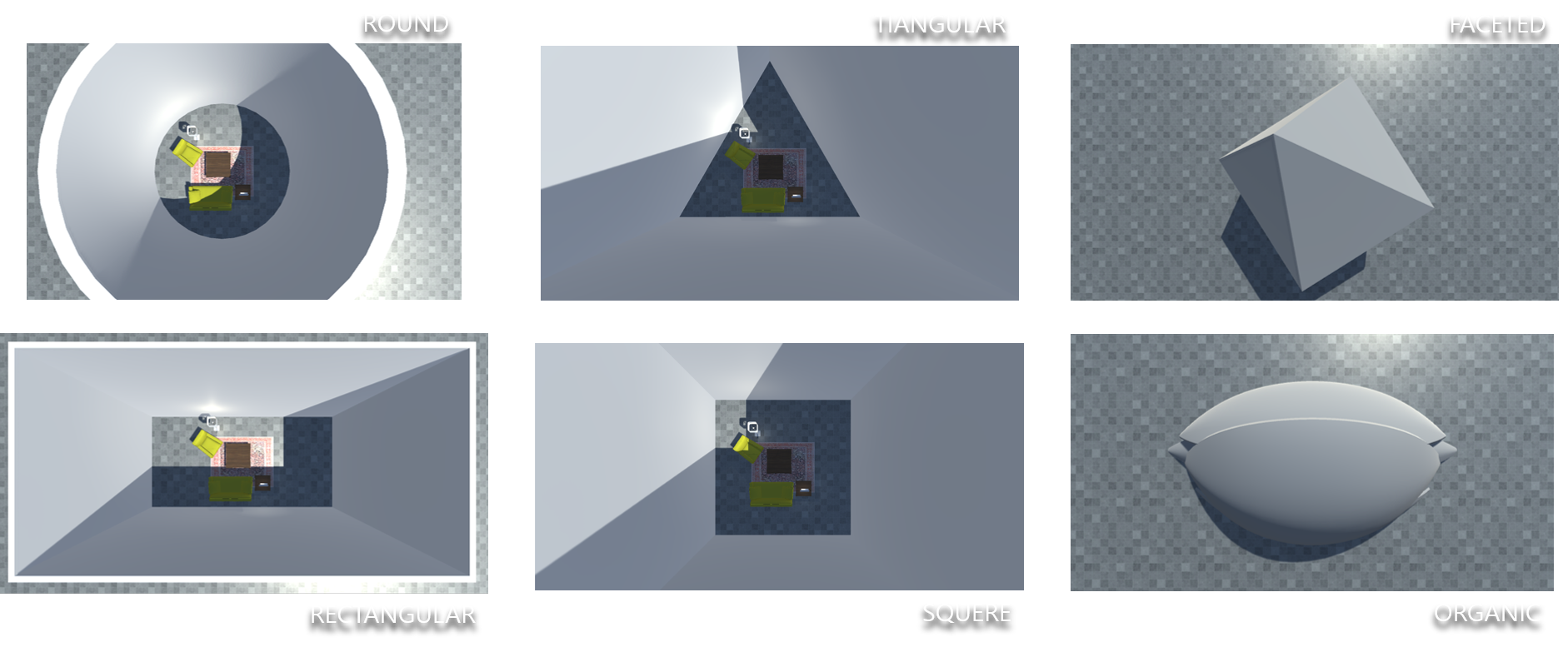
types of rooms tested
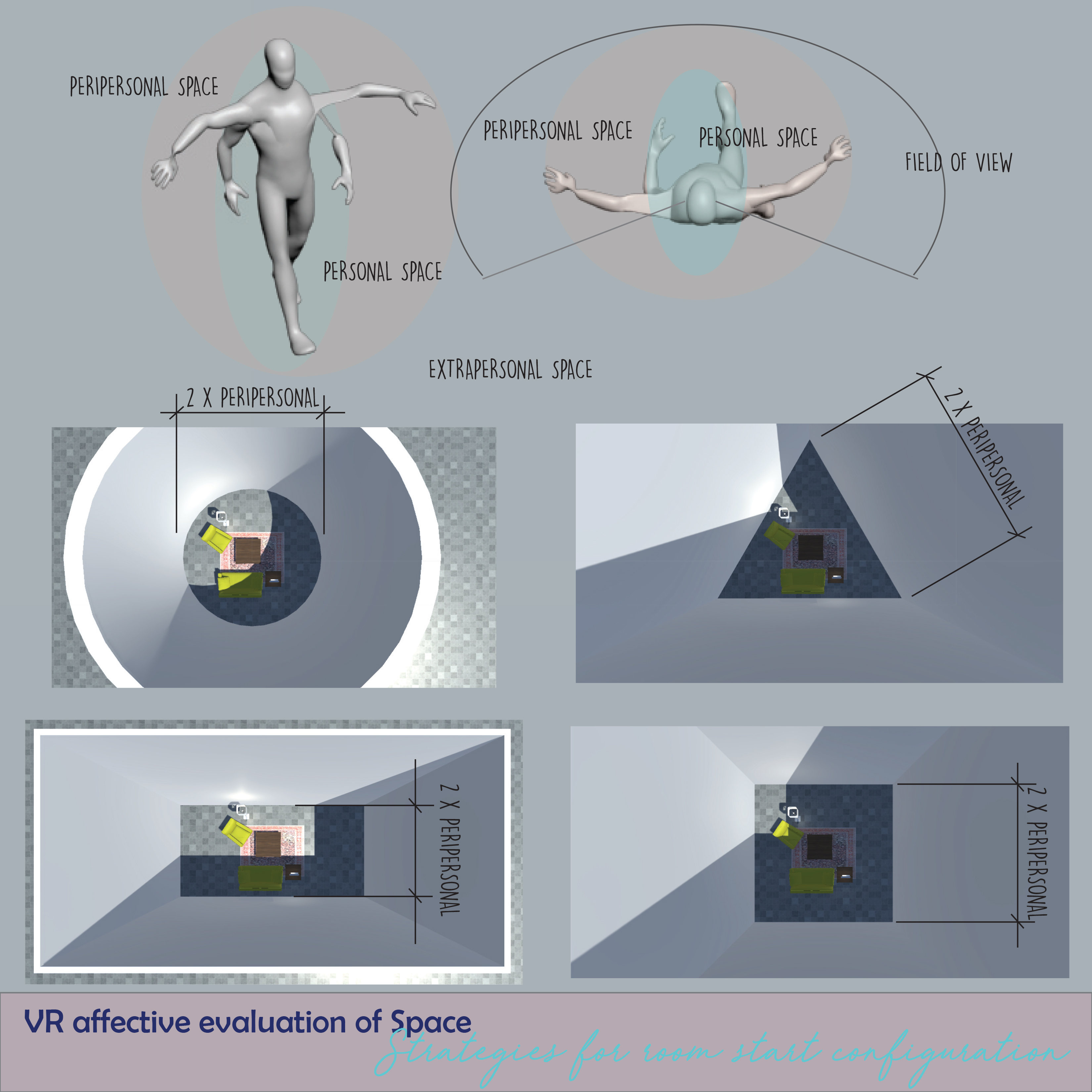
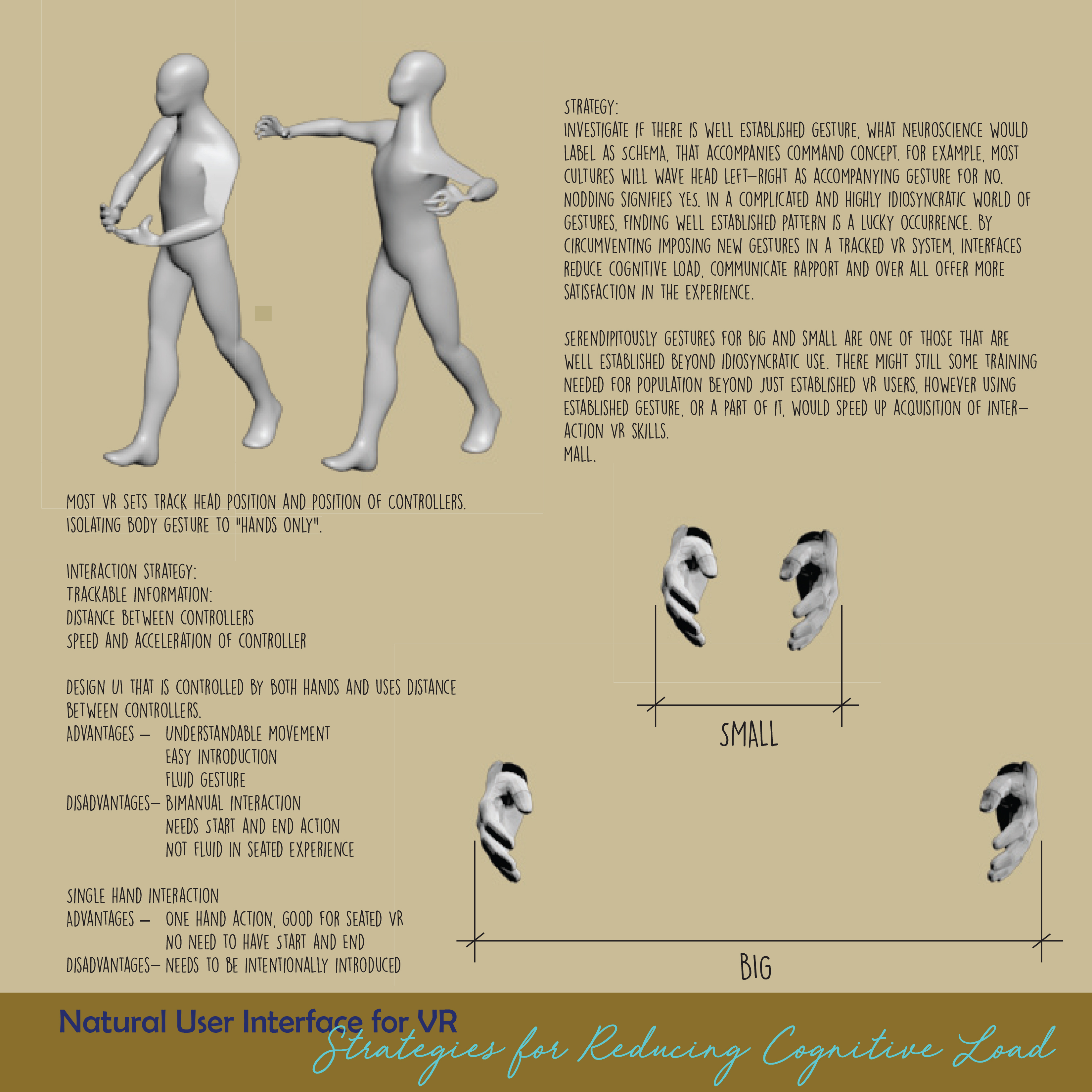
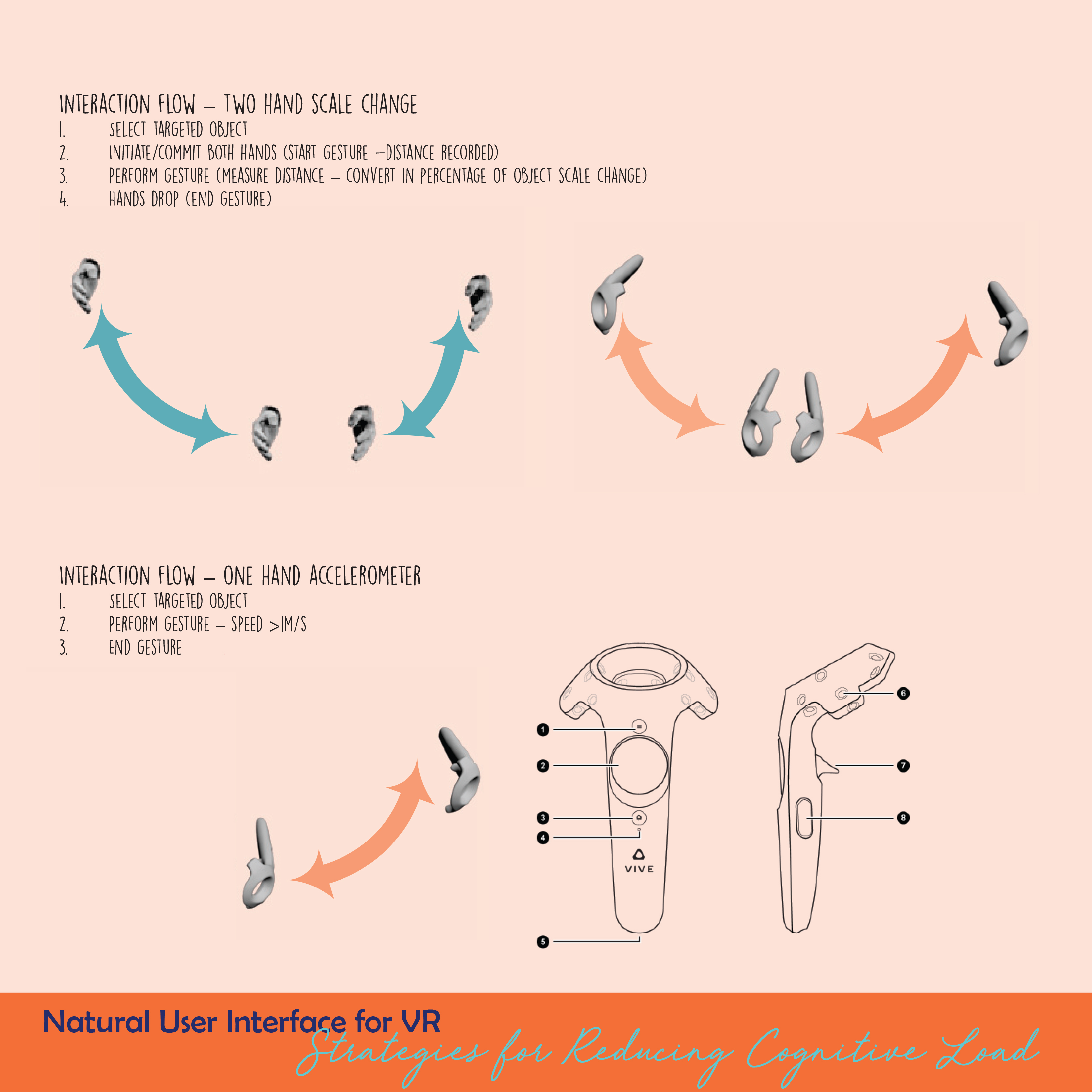
more on the UX for the VR Game development can be found a bit on research process is HERE integration can be found HERE and HERE
Developing natural user interfaces that reduce cognitive load during interaction..excerpt
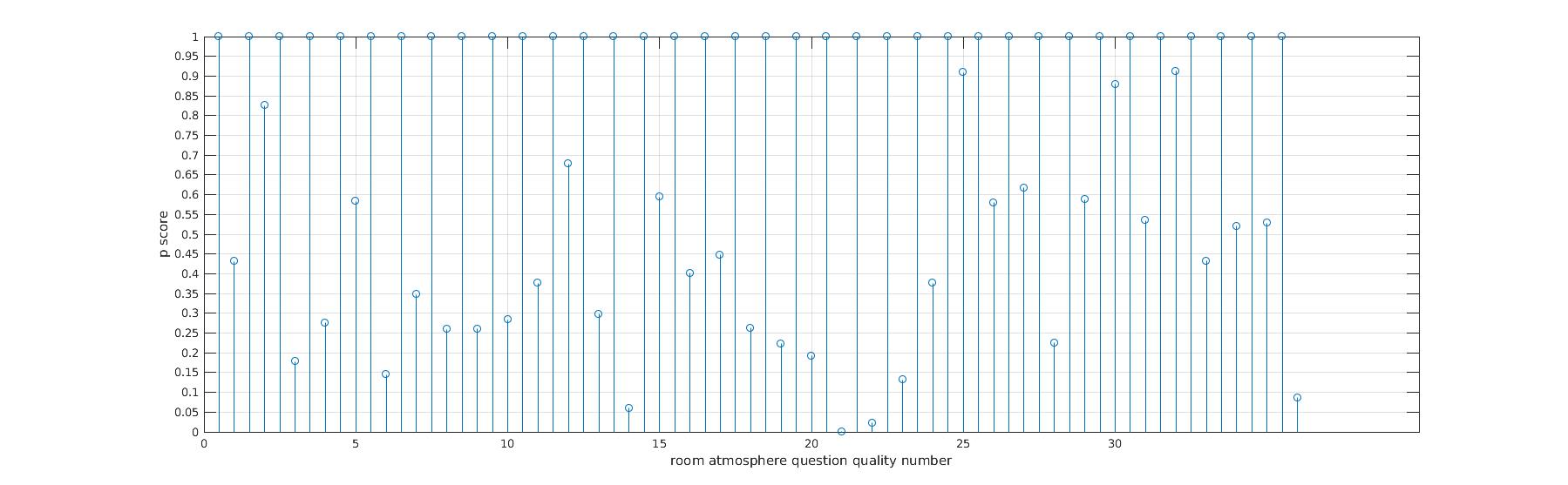
results that have collected so far on the small set 25 testers
preferable room

NaiveBayes results 25 participants room preference
| ConfusionMatrix = 3 0 0 0 0 1 1 0 0 0 0 0 5 0 0 0 1 2 8 0 0 0 0 0 3 |
Posterior = 0.0000 0.9999 0.0000 0.0001 0.0000 0.0000 0.9989 0.0011 0.0000 0.0000 0.0000 0.0000 1.0000 0.0000 0.0000 1.0000 0.0000 0.0000 0.0000 0.0000 0.0000 0.0129 0.0000 0.0001 0.9870 0.0000 0.0000 0.0000 0.0000 1.0000 0.0007 0.0000 0.0000 0.0000 0.9993 0.0000 1.0000 0.0000 0.0000 0.0000 1.0000 0.0000 0.0000 0.0000 0.0000 0.0002 0.0000 0.0000 0.0000 0.9998 0.0000 0.7086 0.0000 0.0000 0.2914 0.0000 0.0000 1.0000 0.0000 0.0000 0.9988 0.0012 0.0000 0.0000 0.0000 0.9799 0.0000 0.0000 0.0000 0.0201 0.8004 0.0000 0.0000 0.0074 0.1923 1.0000 0.0000 0.0000 0.0000 0.0000 0.0000 0.0000 0.0000 0.0000 1.0000 0.0000 0.0000 0.0000 0.9993 0.0007 0.0000 0.0000 0.0000 0.0000 1.0000 0.0000 0.0000 0.0000 1.0000 0.0000 0.0000 0.0000 0.0000 0.0000 1.0000 0.0014 0.0000 0.0000 0.0000 0.9986 0.9999 0.0000 0.0000 0.0000 0.0001 0.0000 0.0000 0.0000 1.0000 0.0000 |
in development testing demo of VR Game
 Natasha Bajc